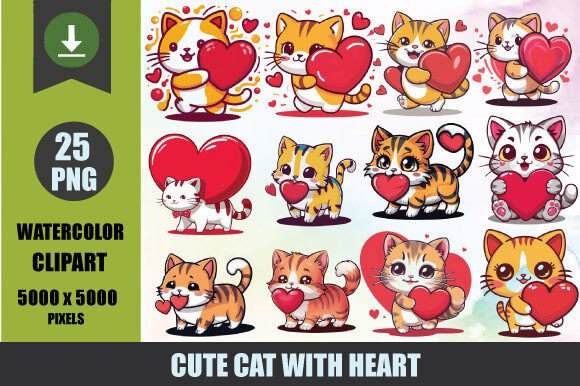
Cute Cat with Heart Watercolor Clipart Review
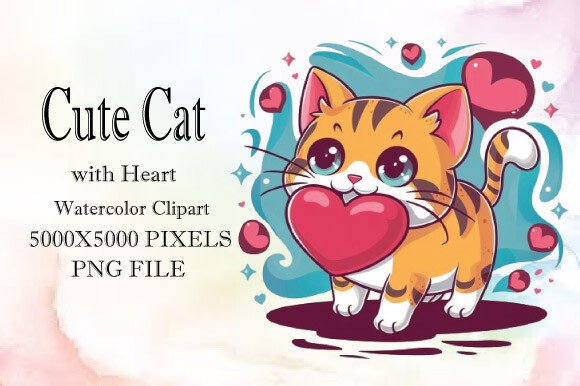
As an embroidery designer who constantly evaluates digital assets for stitchability, my first reaction to the Cute Cat with Heart Watercolor Clipart was a mix of delight and immediate technical assessment. Visually, this illustration carries a soft, whimsical charm that screams "handmade boutique." The watercolor aesthetic suggests gentle gradients and organic edges, which is exactly what customers currently seek in personalized gifts and nursery decor. However, translating a raster or vector watercolor illustration into a machine embroidery design requires more than just hitting an auto-digitize button. When I look at this artwork, I am not just seeing a pretty picture; I am visualizing how those painted washes will translate into satin stitches, fill stitches, and running stitch outlines on actual fabric.
Translating Watercolor Aesthetics to Thread
The primary challenge and opportunity with this specific clipart lies in its texture. Watercolor implies fluidity, but embroidery is structural. For this design to succeed as a commercial embroidery project or a cherished handmade product, the digitizing must respect the original art's mood while adhering to mechanical limitations. If you are planning to use this for custom apparel or baby embroidery, the stitch density becomes critical. Too dense, and the watercolor effect looks like a plastic patch; too sparse, and the fabric grain shows through, breaking the illusion of painted color.
I envision this design performing exceptionally well as a centerpiece for sweatshirt embroidery or tote bag designs. The heart element adds an emotional anchor, making it ideal for Valentine’s Day merchandise, anniversary gifts, or "pet mom" branding. However, because watercolor edges are often soft and undefined, you cannot rely solely on standard fill stitches. You may need to incorporate shading techniques or variegated thread colors to mimic the pigment bleeding found in the original illustration. This level of detail elevates a simple digital embroidery file from a basic graphic to a premium textile art piece.
Real-World Application: The Custom Tote Bag Test
To truly evaluate this asset, let us consider a real-life scenario: creating a line of canvas tote bags for a local craft fair or Etsy shop. Canvas is a textured, unforgiving fabric that can swallow fine details. If I were preparing the Cute Cat with Heart Watercolor Clipart for this substrate, I would immediately assess the contrast. Watercolors often utilize pale pastels that might disappear against natural unbleached canvas. In this case, adding a subtle running stitch outline or increasing the saturation of the thread colors during the digitizing phase would be necessary to maintain visual clarity.
Furthermore, tote bags endure significant wear. The connection points between the cat and the heart must be secure. If the original illustration has thin, wispy connections typical of watercolor splashes, these areas are high-risk for thread breaks or puckering during production. As a maker, I would reinforce these transition zones in the embroidery file, perhaps using a denser underlay or adjusting the pull compensation. This practical foresight ensures the finished product remains durable for the end user, protecting your reputation as a quality craft business owner.
Navigating Fabric Limitations and Hoop Sizes
While this illustration is versatile, it demands careful placement. Not every fabric is a suitable canvas for watercolor-style embroidery. Stretchy fabrics like jersey knits require significant stabilization to prevent the design from distorting the garment's drape. Because watercolor designs often cover larger surface areas to show off the gradient effects, they can become stiff if the stitch count is too high. For baby clothes or lightweight summer tees, you must verify that the design size fits within a manageable hoop size without becoming a bulletproof vest on the chest.
Dark fabrics present another hurdle. Watercolor relies on light passing through layers of pigment. On black or navy fabric, that luminosity is lost unless you stitch a white underbase. This adds significant density and production time. Before committing to a bulk order of dark apparel, test the design on scrap fabric first. Check whether the white base creates a visible halo or if the top threads fully encapsulate the foundation. Sometimes, adapting the design for dark garments means simplifying the color palette entirely, shifting away from the original watercolor vibe toward a bolder, more graphic interpretation.
Commercial Viability for Small Business Owners
For Etsy sellers and creative entrepreneurs, the Cute Cat with Heart Watercolor Clipart offers strong merchandising potential, provided you navigate the licensing correctly. Always confirm whether your purchase includes commercial rights for finished products versus digital redistribution. Assuming you have the proper license, this design is a powerhouse for niche marketing. It bridges the gap between pet lovers and romantic aesthetics, allowing for cross-category sales.
When listing items featuring this design, your printable mockups should accurately reflect the stitched texture rather than just superimposing the digital clipart onto a shirt template. Customers appreciate transparency. Showing the actual stitch-out in your listing photos builds trust and manages expectations regarding the texture and sheen of the embroidery. This honesty reduces returns and increases buyer engagement. Additionally, consider how this design pairs with others in your catalog. Does it share a similar stitch style or color palette? Brand consistency across your embroidered patches, pillow covers, and apparel helps establish a recognizable shop identity.
Essential Pre-Stitch Checklist for Makers
Before you load this design into your machine for a client project or personal creation, run through this practical evaluation list. These steps separate hobbyist results from professional-grade output:
- Analyze Stitch Direction: Ensure the digitizer followed the flow of the watercolor washes. Random stitch directions kill the painterly effect.
- Verify Stabilizer Choice: Match the stabilizer weight to both the fabric and the design density. A tear-away might suffice for denim, but a cut-away is likely safer for preserving the registration of detailed watercolor shading on knits.
- Check Small Details: Inspect the cat’s facial features and the heart’s curves. Are they distinct at the intended size? Tiny elements may need to be enlarged or simplified to prevent needle breaks.
- Test Color Blending: Run a sample to see how adjacent thread colors interact. Physical thread blending differs significantly from digital color mixing.
- Review Licensing Terms: Double-check if you can use the source clipart for digital previews or if you must photograph your own stitched samples for marketing.
- Evaluate Washability: If selling tea towels or baby blankets, wash the test sample. Watercolor-style fills can sometimes pull apart or distort after laundering if the underlay was insufficient.
Final Thoughts on Design Integrity
The Cute Cat with Heart Watercolor Clipart is more than just a cute image; it is a test of your digitizing and production skills. Its success in the real world depends entirely on how well you bridge the gap between digital art and textile reality. When executed with attention to density, fabric compatibility, and color theory, it transforms into a high-value asset for any embroidery business. Whether you are stitching a one-of-a-kind personalized gift or launching a new collection of holiday embroidery, treat this illustration with the technical respect it deserves. The result will be a product that feels intentional, professional, and undeniably handmade.