Watercolor Cute Opossum Clipart: An Embroidery Review
As a professional embroidery designer and product reviewer, I approach every new digital asset with a specific question: will this actually stitch out well on real fabric? When evaluating Watercolor Cute Opossum Clipart, my assessment goes far beyond the screen. While these illustrations are charming digitally, their true value for makers, Etsy sellers, and apparel decorators lies in their translatability to thread. This review breaks down how this specific design performs when moving from a digital file to a tangible, handmade product.
First Impressions and Visual Personality
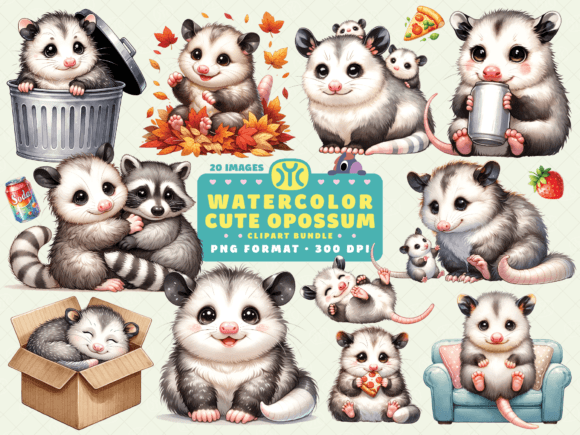
My initial reaction to this Watercolor Cute Opossum Clipart is that it captures a very specific, trending aesthetic. The mood is undeniably whimsical yet grounded, featuring soft edges and a palette that mimics traditional watercolor painting. For an embroidery project, this visual style suggests a move away from rigid, high-contrast cartoon looks toward something more organic and textured. The shape of the opossum appears balanced, which is crucial for hooping; awkwardly elongated designs can waste stabilizer and limit placement options.
The detail level seems appropriate for medium-to-large applications. In digital illustrations intended for print, fine lines are acceptable, but for machine embroidery design, those same lines can become problematic. This clipart appears to have distinct color blocks rather than microscopic gradients, which is a positive indicator for digitizing. It feels like a design that would naturally belong on nursery decor, personalized gifts, or boutique merchandise where customers appreciate a softer, hand-painted vibe over aggressive commercial graphics.
Real-World Application: The Custom Sweatshirt Test
To truly judge this asset, I mentally placed it in a real-life scenario: creating a custom embroidered sweatshirt for a small shop product launch. Sweatshirts are a staple for craft businesses, but the fleece texture can swallow delicate details. With this Watercolor Cute Opossum Clipart, I envision using it as a center chest design or a large back print replacement.
In this context, the design’s success depends on how the watercolor effect is interpreted into stitches. If the digitized version uses excessive fill stitch density to mimic paint blending, the sweatshirt fabric could pucker or become bulletproof. However, if the design utilizes varied running stitch layers or lighter tatami fills to create depth, it will maintain the garment's drape. For a tote bag design, this graphic offers excellent potential because canvas provides a stable foundation for detailed color work. Conversely, for baby embroidery on onesies, I would need to verify that the stitch count isn't too heavy for lightweight cotton jersey. The versatility here is promising, provided the end-user understands fabric limitations.
Translating Watercolor Aesthetics to Thread
One of the biggest challenges for any embroidery designer is managing expectations regarding watercolor styles. Thread does not blend like pigment. When reviewing this Watercolor Cute Opossum Clipart for commercial embroidery use, I look for clear separation between color zones. If the illustration relies on subtle transparency or semi-transparent overlays, the resulting embroidery file may require complex layering that increases production time and thread breaks.
For Etsy sellers and creative entrepreneurs, the visual appeal of the finished product directly impacts customer trust. A muddy, dense stitch-out looks unprofessional. This clipart seems to offer enough definition to allow for clean satin stitch outlines or distinct color changes, which helps maintain stitching clarity. When used for holiday embroidery or seasonal merchandise, the soft colorway allows for easy adaptation; swapping thread colors could transform this opossum from an autumn theme to a spring garden motif without losing its core identity.
Navigating Fabric Constraints and Hoop Sizes
While the design is versatile, there are specific environments where caution is necessary. I would advise against using this Watercolor Cute Opossum Clipart on highly textured fabrics like terry cloth or chunky knits unless you plan to use a topping stabilizer and potentially simplify the design. The "watercolor" nuance gets lost in deep pile textures. Similarly, stretchy performance fabrics pose a risk; the multiple color changes often required for this style can lead to registration issues if the fabric shifts during stitching.
Hoop size is another critical factor. This design likely requires a minimum 4x4 hoop, but ideally a 5x7 or larger to preserve the integrity of the facial features and brushstroke effects. Shrinking a complex illustration down to fit a small cap or pocket area often results in lost details and thread bunching. For curved surfaces like caps, the flat nature of watercolor art can sometimes distort unless specifically digitized for cylindrical hoops. Always check the physical dimensions before purchasing digital embroidery file assets to ensure they match your equipment capabilities.
Practical Notes for Makers and Business Owners
Before listing a finished product or selling items at a craft fair, practical testing is non-negotiable. Here are my technical recommendations for working with this Watercolor Cute Opossum Clipart:
- Test Stitch on Scrap Fabric: Never run this design directly on a final product first. Use a scrap of the exact material you intend to sell to check for puckering and color accuracy.
- Evaluate Stabilizer Needs: Watercolor styles often involve varying densities. You may need a combination of cut-away stabilizer for support and water-soluble topping to keep stitches crisp on textured surfaces.
- Check Thread Color Contrast: Digital screens are backlit; thread is not. Print a color chart or view the design in grayscale to ensure the opossum’s features remain visible against your chosen fabric background.
- Review Licensing for Commercial Use: As an Etsy seller or small business owner, confirm whether the license permits selling physical embroidered goods versus digital files. Using design assets correctly protects your shop from IP disputes.
- Create Printable Mockups: Before investing in thread, place the clipart on digital mockups to gauge customer interest. This validates the marketability of the sweatshirt embroidery or patch concept before production costs are incurred.
Enhancing Product Value and Brand Consistency
Integrating cohesive illustrations like this into your catalog helps build brand recognition. Whether you are making an embroidered patch for denim jackets or a tea towel for a kitchen collection, the consistent artistic voice of the Watercolor Cute Opossum Clipart ties disparate products together. For handmade product creators, this consistency signals professionalism. Buyers recognize that your items are curated, not random.
Furthermore, consider the giftability factor. Personalized gifts featuring this design have high perceived value because the watercolor aesthetic feels bespoke and artistic rather than mass-produced. When photographing your finished work, ensure your lighting captures the sheen of the thread, as this adds a dimensionality that digital prints cannot replicate. This tactile quality is your primary selling point as an apparel decorator or maker.
Final Verdict for Embroidery Professionals
Ultimately, Watercolor Cute Opossum Clipart represents a strong candidate for modern embroidery projects, particularly for those targeting the nursery, cottagecore, or whimsical apparel markets. Its strength lies in its balanced composition and trend-relevant aesthetic. However, its success is entirely dependent on the user's technical proficiency. It is not a "set and forget" design; it demands attention to stabilizer choice, fabric pairing, and density management.
For the experienced digitizer or the careful crafter willing to test and adjust, this illustration offers significant potential for creating unique, high-value merchandise. For beginners, it serves as an excellent learning tool for understanding how to translate painterly effects into structured stitch data. Just remember: always verify the specific file attributes and license terms before adding this asset to your commercial embroidery workflow. When executed with care, this cute opossum can become a standout bestseller in your handmade shop.