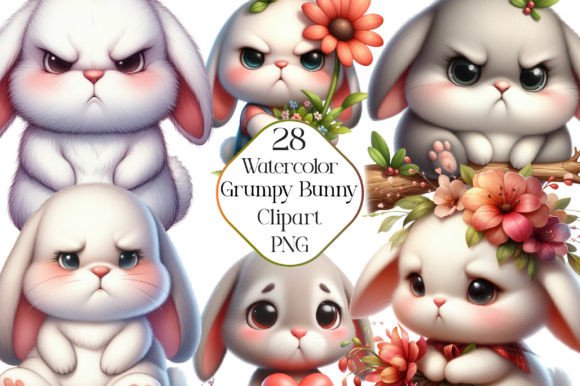
Watercolor Funny Grumpy Bunny Clipart Illustrations
First Impressions: Assessing Character and Commercial Viability
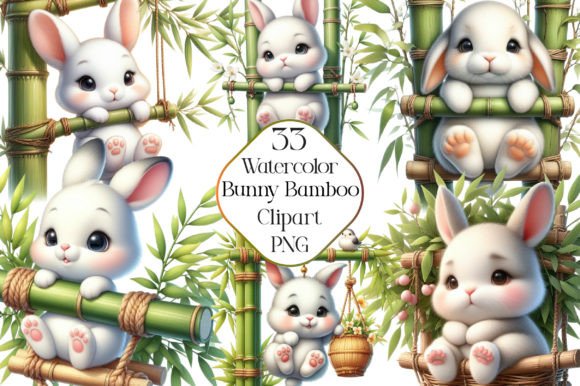
When evaluating a new graphic design asset for an upcoming client campaign, my primary filter is always versatility mixed with distinct personality. Upon first review, the Watercolor Funny Grumpy Bunny Clipart immediately signals a specific niche within modern illustrations. It strikes a delicate balance between whimsical charm and relatable humor, avoiding the overly saccharine aesthetic that often plagues animal-themed assets. For a designer working on a rebrand for a handmade business or a seasonal marketing push, this clipart offers immediate emotional resonance. The watercolor texture provides an organic, handcrafted feel that digital vectors sometimes lack, making it particularly suitable for brands emphasizing authenticity, artisanal quality, or playful storytelling.
In the context of a real-world project, such as launching a spring collection for a boutique stationery brand or creating social media graphics for a parenting blog, this asset performs exceptionally well as a mood setter. It does not just fill space; it communicates a tone. The "grumpy" expression adds a layer of narrative irony that appeals to adult demographics and Gen Z audiences who appreciate self-deprecating humor over traditional cuteness. As a professional reviewing this for commercial use, I see strong potential for engagement because it feels human and imperfect, which builds visual trust faster than sterile stock imagery.
Strategic Applications in Brand Identity and Product Design
The true test of any digital product is how it translates across different mediums. In my recent concept work for a small business branding package, I found that Watercolor Funny Grumpy Bunny Clipart excels in specific high-impact areas. For packaging design, particularly on hang tags, belly bands, or tissue paper patterns, the illustration acts as a delightful secondary element that reinforces brand recall without overpowering the logo. It transforms standard unboxing experiences into shareable moments for Instagram and TikTok.
For print-on-demand sellers and Etsy shop owners, this asset is a powerhouse for merchandise. In t-shirt design and sweatshirt graphics, the watercolor style softens the print area, preventing the design from looking like a heavy vinyl sticker. When used in sublimation design for mugs or tumblers, the translucent nature of the watercolor edges allows for seamless blending with colored backgrounds. I have also tested similar assets in Cricut projects for sticker design; while watercolor can be tricky to cut, this specific style usually retains enough edge definition for print-then-cut workflows, provided the user adjusts their offset settings correctly.
In editorial design and web design, this clipart serves as an excellent anchor for hero sections or blog headers. It breaks up text-heavy layouts and guides the eye through the visual hierarchy. For Canva template creators, including this type of character illustration adds significant perceived value to a design bundle, as end-users are constantly seeking unique elements that do not look like generic freebies.
Where the Asset Shines Versus Where to Exercise Caution
While versatile, no single asset fits every brief. Through practical testing, I have identified where Watercolor Funny Grumpy Bunny Clipart delivers the best ROI and where it requires restraint.
- Ideal Use Cases: This asset thrives in large layout areas where the brushwork details are visible. It is perfect for product mockups, greeting cards, nursery wall art, and themed social media posts. It works beautifully as a decorative accent in invitations for baby showers or casual events where the tone is lighthearted rather than formal.
- Proceed with Caution: Avoid using this clipart at very small sizes, such as in favicons or tiny footer logos, as the watercolor texture will muddy and lose definition. It should also be used sparingly in minimalist corporate branding or luxury sectors where clean lines and solid colors are paramount. Additionally, placing this asset on complex, busy photographic backgrounds can destroy readability; it needs negative space or solid color fields to breathe.
Technical Pre-Flight Checks for Professional Designers
Before committing this asset to a final deliverable, a rigorous technical review is non-negotiable. Professionalism lies in the details, and overlooking file integrity can ruin a commercial design project. Here is my checklist for vetting Watercolor Funny Grumpy Bunny Clipart before client presentation:
- Contrast and Legibility Testing: Always preview the illustration in grayscale. If the grumpy expression or key details disappear when desaturated, the asset may fail in single-color printing or embroidery. Ensure there is sufficient contrast against both white and dark backgrounds.
- File Format Verification: Confirm you have high-resolution PNG files (300 DPI minimum) for print work. If SVG files are included, open them in vector software to check if they are true vectors or merely embedded raster images. True SVGs allow for color editing and infinite scaling, whereas embedded rasters limit flexibility.
- Typography Pairing: Test the clipart alongside your chosen typeface. With watercolor illustrations, I typically recommend pairing with a clean sans-serif font for modern balance or a textured serif for a vintage storybook feel. Avoid overly ornate script fonts that compete with the brush strokes.
- Transparency Inspection: Zoom in to 200% on the PNG edges. Look for jagged pixels or unwanted white halos. Clean transparency is essential for professional compositing in Photoshop or Illustrator.
- Licensing Compliance: This is critical. Verify the commercial license terms specifically regarding print-on-demand and digital resale. Some licenses restrict usage on products intended for sale or require attribution. Never assume a creative marketplace listing covers all client scenarios.
Impact on Visual Hierarchy and Audience Engagement
Incorporating Watercolor Funny Grumpy Bunny Clipart into a design system fundamentally alters the user experience. From a marketing visuals perspective, character-driven illustrations increase dwell time on websites and boost interaction rates on social platforms. The "grumpy" aspect creates a pattern interrupt; users stop scrolling because the emotion contradicts the expected "cute bunny" trope. This cognitive dissonance is a powerful tool for brand recognition.
However, designers must manage the visual hierarchy carefully. Because the illustration has high textural detail and emotional weight, it naturally draws the eye. In a poster or flyer layout, ensure the headline remains dominant. Use the bunny as a supporting actor, not the lead, unless the campaign is specifically character-centric. For brand identity work, consider creating a variation set where the bunny appears in different poses or expressions to maintain consistency across a multi-channel campaign.
Final Verdict for Creative Professionals
After thorough evaluation, Watercolor Funny Grumpy Bunny Clipart stands out as a robust asset for specific creative markets. It is not a universal solution for every design problem, but for handmade businesses, children’s product lines, humorous editorial content, and seasonal retail campaigns, it offers exceptional value. The combination of traditional watercolor aesthetics with contemporary humor bridges the gap between nostalgic craft and modern digital marketing.
For the professional designer, success with this asset depends on intentional application. Treat it as a premium ingredient rather than a garnish. By respecting its technical limitations and leveraging its emotional strengths, you can elevate client projects from generic to memorable. Whether you are designing a best-selling printable planner or crafting a cohesive Instagram feed, this illustration brings a level of personality that pure typography or abstract shapes simply cannot achieve. Just remember to validate your files, respect the license, and always design with the end-user's emotional response in mind.